


Dirty Snouts
Friends NOT Food Cow
Friends NOT Food Cow
A minimum of ten percent of all sales is donated to farm animal sanctuaries.
Couldn't load pickup availability
Product Back Story
Product Back Story
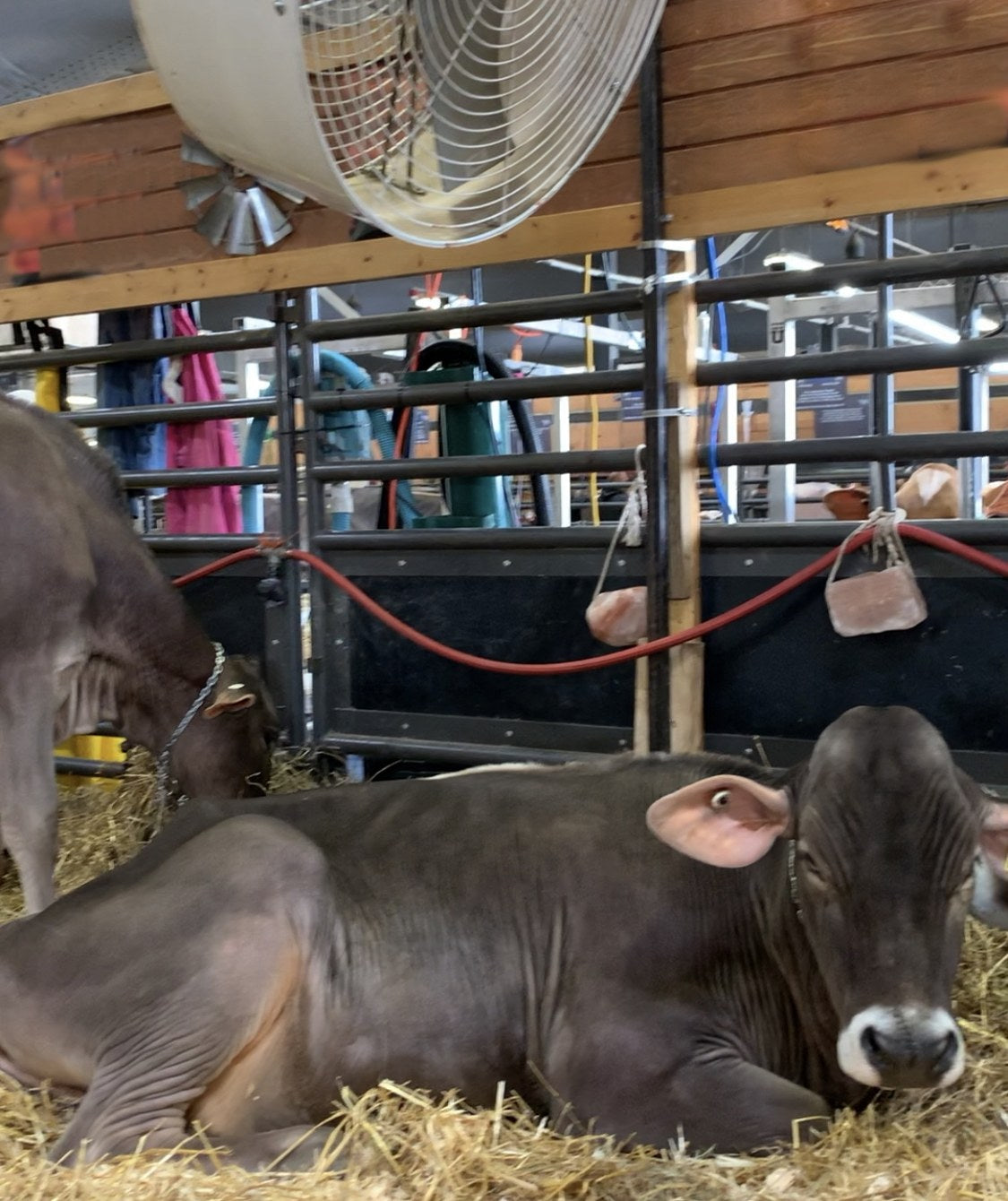
The beautiful girl featured on this shirt is a dairy cow that I spent some time with at the World Dairy Expo. continue
Cows are intelligent beings who experience love, pain and fear, among other emotions. Yet, they are commodified for their flesh and their bodily fluids meant for their own offspring.

The beautiful girl featured on this shirt is a dairy cow that I spent some time with at the World Dairy Expo. I call her Bernadette, which means “brave as a bear." Like the 2,300+ cows at this annual 5-day event, she was tied up with a very short leash preventing her from moving much. Typically curious as cows are, she managed to stick her nose into a large fan and slice it open. Do you see her stitches? My heart breaks for Bernadette and all the others brought into this world for the sole purpose of human benefit.
Many people, including vegetarians, are surprised to learn the truth about the dairy industry. The notion that no animals are harmed or killed to produce milk, ice cream and butter is a fallacy.
Product Deets
Product Deets
Dirty Snouts logo on the left sleeve.
Shirt Info
Select the Adult Unisex option if you’re going for a standard t-shirt style. These Bella + Canvas 4.2 oz. shirts are perfect for most sizes and shapes. Want a more fitted look?
Select the Women’s Cut. These are Bella + Canvas’ 4.2 oz. “Favorite Tee,” with a longer body, in addition to being more slender and feminine than the Adult Unisex and Youth options. I think they run very small, so I suggest you order 1 or 2 sizes up.
If you’re shopping for a kid or small adult, the Youth shirts are the way to go. They have a boxier, shorter cut than the Adult Unisex and Women’s Cut designs.
Adult Unisex and Women’s Cut solid colors are 100% combed and ringspun cotton. Heather colors are 52/48 airlume combed and ringspun cotton/polyester. All are W.R.A.P. (Worldwide Responsible Accredited Production) certified and do not use sweatshops.
Youth shirts are Anvil 4.5 oz. shirts and are 100% combed ringspun cotton for solid colors and a combination of cotton and poly for heather colors.
Toddler shirts and onesies are by LAT Apparel (Rabbit Skins), and are ethically produced in W.R.A.P. certified (Worldwide Responsible Accredited Production), sweatshop- and child-labor free factories. Garments are 4.5 oz., 100% combed ringspun cotton; onesies have 3-snap closure.
Care Instructions
Care Instructions


Video credit: ©Dirty Snouts
The Endless Dairy-Go-Round
This video is from a dairy I visited, where cows are milked in a rotary milking parlor two times a day. One of these mothers had given birth just 30 minutes earlier. You can see her placenta hanging out her backside. Instead of being with her newborn, she was already back on the rotary being milked, and her baby had been put in a stall alone.
Separating mothers and babies shortly after birth is standard practice in the dairy industry, and it’s traumatic for both. Research confirms that mother cows form strong emotional bonds with their calves and show signs of distress when they’re separated.
Males don’t produce milk, so they’re kept in confinement and then slaughtered as babies for veal, pet food and soft leather. Female calves follow in their mothers’ hoof steps. They’re impregnated again and again to keep the milk coming, then killed long before their natural lifespans once they’re “spent.”